Generate Public Private Key Pair C#
- C# Key Value Pair
- Private Key Vs Public Key
- C# Create Public Private Key Pair
- Generate Public Private Key Pair C Example
- Generate Public Private Key Pair Online
- Generate Public And Private Key Pair C#
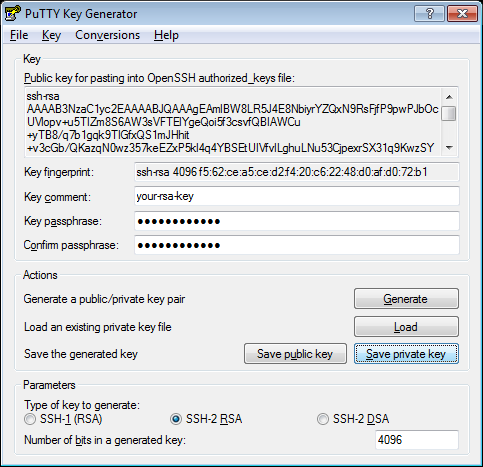
To generate private (d,n) key using openssl you can use the following command: openssl genrsa -out private.pem 1024 To generate public (e,n) key from the private key using openssl you can use the following command: openssl rsa -in private.pem -out public.pem -pubout. In case you travel and can’t carry your laptop with you, just keep your private key on a USB stick and attach it to your physical keychain. Your server will be much safer this way. Generate Public/Private SSH Key Pair. Open Command Prompt from the Start Menu and type. How to: Create a public-private key pair.; 2 minutes to read; In this article. To sign an assembly with a strong name, you must have a public/private key pair. This public and private cryptographic key pair is used during compilation to create a strong-named assembly. You can create a key pair using the Strong Name tool (Sn.exe). Generating a Secure Shell (SSH) Public/Private Key Pair Several tools exist to generate SSH public/private key pairs. The following sections show how to generate an SSH key pair on UNIX, UNIX-like and Windows platforms. Oct 12, 2016 Angela from the API support team walks through how to generate a public private key pair using OpenSSL and register a private application. If you want to try integrating to Xero, partner. The.pub file is your public key, and the other file is the corresponding private key. If you don’t have these files (or you don’t even have a.ssh directory), you can create them by running a program called ssh-keygen, which is provided with the SSH package on Linux/macOS systems and comes with Git for Windows.
-->To sign an assembly with a strong name, you must have a public/private key pair. This public and private cryptographic key pair is used during compilation to create a strong-named assembly. You can create a key pair using the Strong Name tool (Sn.exe). Key pair files usually have an .snk extension.
Note
In Visual Studio, the C# and Visual Basic project property pages include a Signing tab that enables you to select existing key files or to generate new key files without using Sn.exe. In Visual C++, you can specify the location of an existing key file in the Advanced property page in the Linker section of the Configuration Properties section of the Property Pages window. The use of the AssemblyKeyFileAttribute attribute to identify key file pairs was made obsolete beginning with Visual Studio 2005.
Create a key pair
To create a key pair, at a command prompt, type the following command:
sn –k <file name>
In this command, file name is the name of the output file containing the key pair.
The following example creates a key pair called sgKey.snk.
If you intend to delay sign an assembly and you control the whole key pair (which is unlikely outside test scenarios), you can use the following commands to generate a key pair and then extract the public key from it into a separate file. First, create the key pair:
Next, extract the public key from the key pair and copy it to a separate file:
Once you create the key pair, you must put the file where the strong name signing tools can find it.
When signing an assembly with a strong name, the Assembly Linker (Al.exe) looks for the key file relative to the current directory and to the output directory. When using command-line compilers, you can simply copy the key to the current directory containing your code modules.
If you are using an earlier version of Visual Studio that does not have a Signing tab in the project properties, the recommended key file location is the project directory with the file attribute specified as follows:
See also
-->To sign an assembly with a strong name, you must have a public/private key pair. This public and private cryptographic key pair is used during compilation to create a strong-named assembly. You can create a key pair using the Strong Name tool (Sn.exe). Key pair files usually have an .snk extension.
C# Key Value Pair
Note
In Visual Studio, the C# and Visual Basic project property pages include a Signing tab that enables you to select existing key files or to generate new key files without using Sn.exe. In Visual C++, you can specify the location of an existing key file in the Advanced property page in the Linker section of the Configuration Properties section of the Property Pages window. The use of the AssemblyKeyFileAttribute attribute to identify key file pairs was made obsolete beginning with Visual Studio 2005.
Create a key pair
To create a key pair, at a command prompt, type the following command:
sn –k <file name>
In this command, file name is the name of the output file containing the key pair.
The following example creates a key pair called sgKey.snk.
Private Key Vs Public Key
If you intend to delay sign an assembly and you control the whole key pair (which is unlikely outside test scenarios), you can use the following commands to generate a key pair and then extract the public key from it into a separate file. First, create the key pair:
C# Create Public Private Key Pair
Next, extract the public key from the key pair and copy it to a separate file:
Once you create the key pair, you must put the file where the strong name signing tools can find it.
Generate Public Private Key Pair C Example
When signing an assembly with a strong name, the Assembly Linker (Al.exe) looks for the key file relative to the current directory and to the output directory. When using command-line compilers, you can simply copy the key to the current directory containing your code modules.
Generate Public Private Key Pair Online
If you are using an earlier version of Visual Studio that does not have a Signing tab in the project properties, the recommended key file location is the project directory with the file attribute specified as follows: